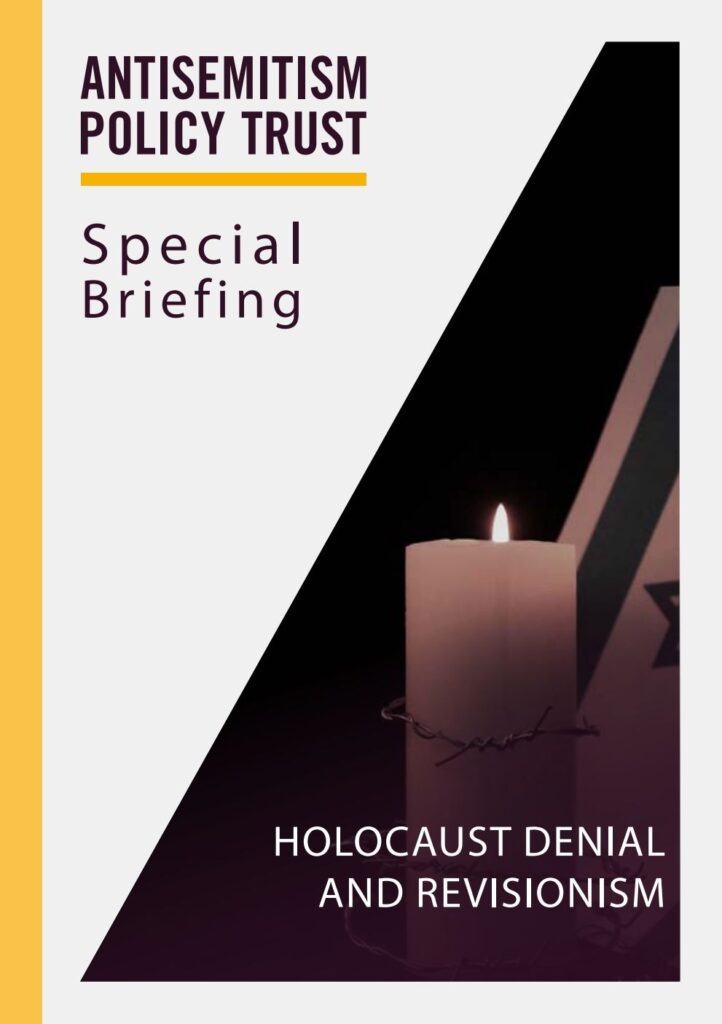
Holocaust Denial and Revisionism
Holocaust Denial and Revisionism
The Holocaust – the murder of six million Jewish people– was a unique evil in the world. Many others, including Roma and Sinti, black, disabled and gay people, and political opponents, were also murdered by the Nazis in a barbaric undertaking that has left a stain on human history. It is imperative that we learn lessons from this dark moment in history for humanity’s sake.
Sadly, there is, in the words of historian Deborah Lipstadt, a ‘growing assault on truth and memory.’ Primarily, this finds form in outright denial of the Holocaust: an antisemitic act. The shape of Holocaust denial and abuse continues to evolve, shifting between what can be termed classical denial; the denial of the ways in which Jews were murdered, the mechanisms of annihilation and the number of Jews killed, and motivational denial; in other words, what drove Hitler and the Nazi party to carry out the Holocaust. The latter form of denial, which has seen a gradual resurgence, is peddled by deniers and revisionists who, despite overwhelming evidence, reject the true historical narrative of the Holocaust. They invent new narratives, false and baseless, seeking to mask their arguments behind scholarly rhetoric in order to gain credibility.
Back to Policy Briefings & Reports